Built for years, not weeks.
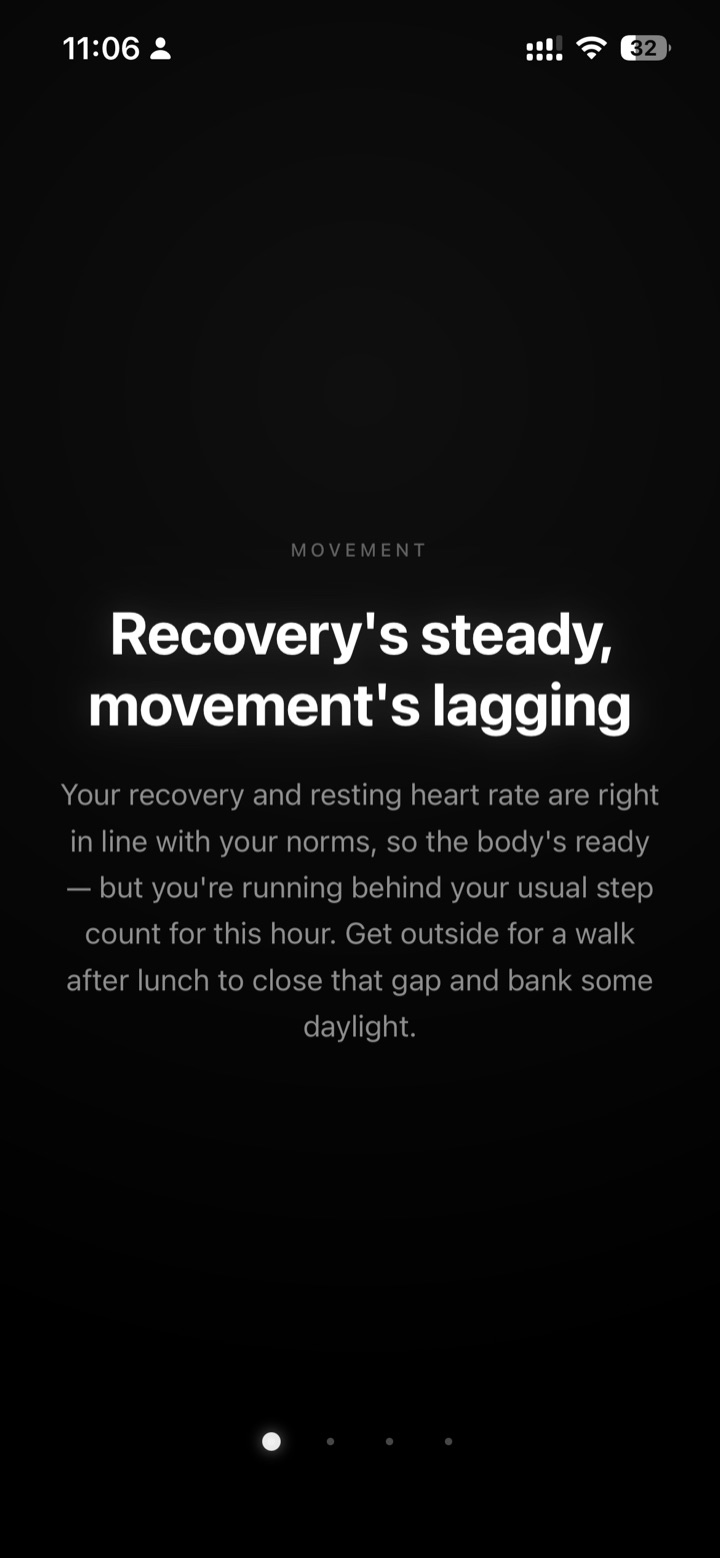
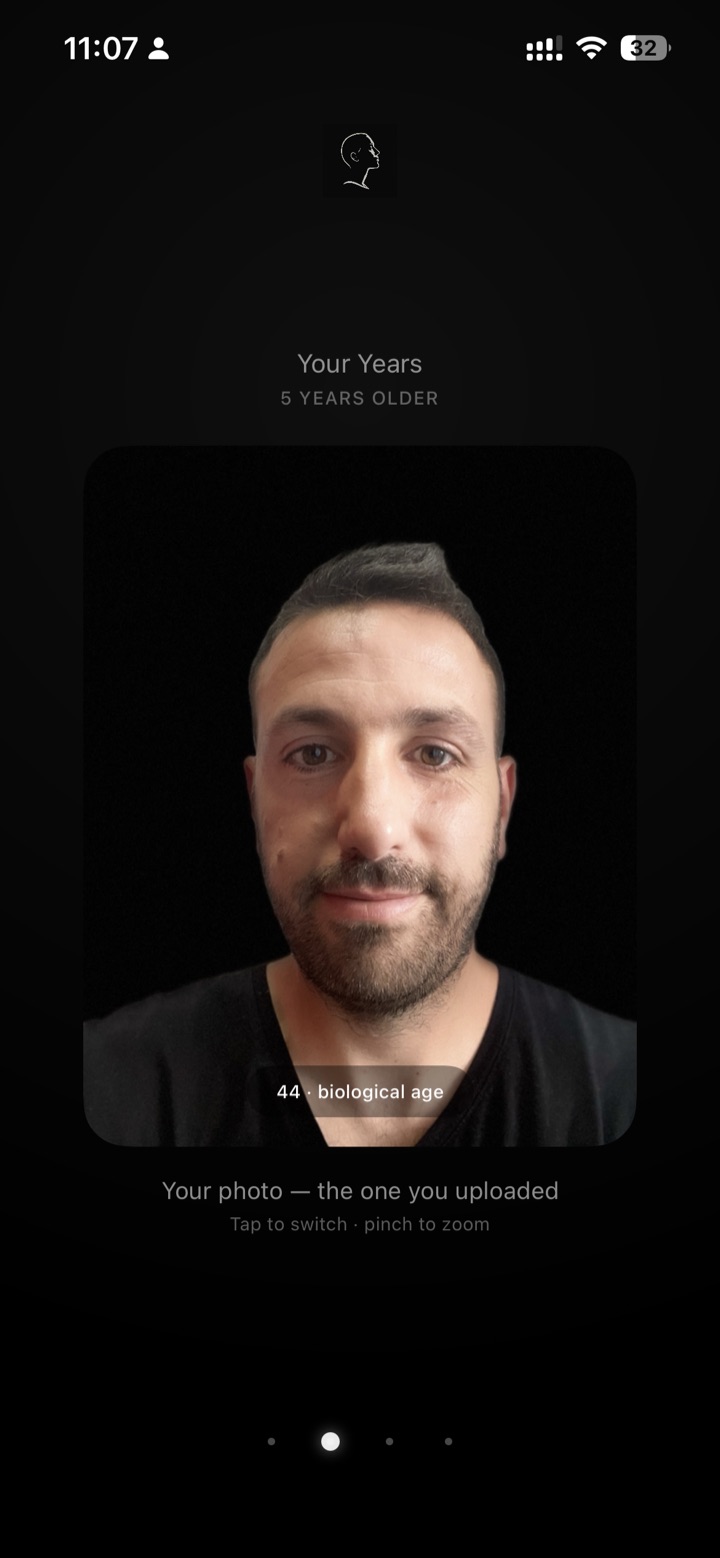
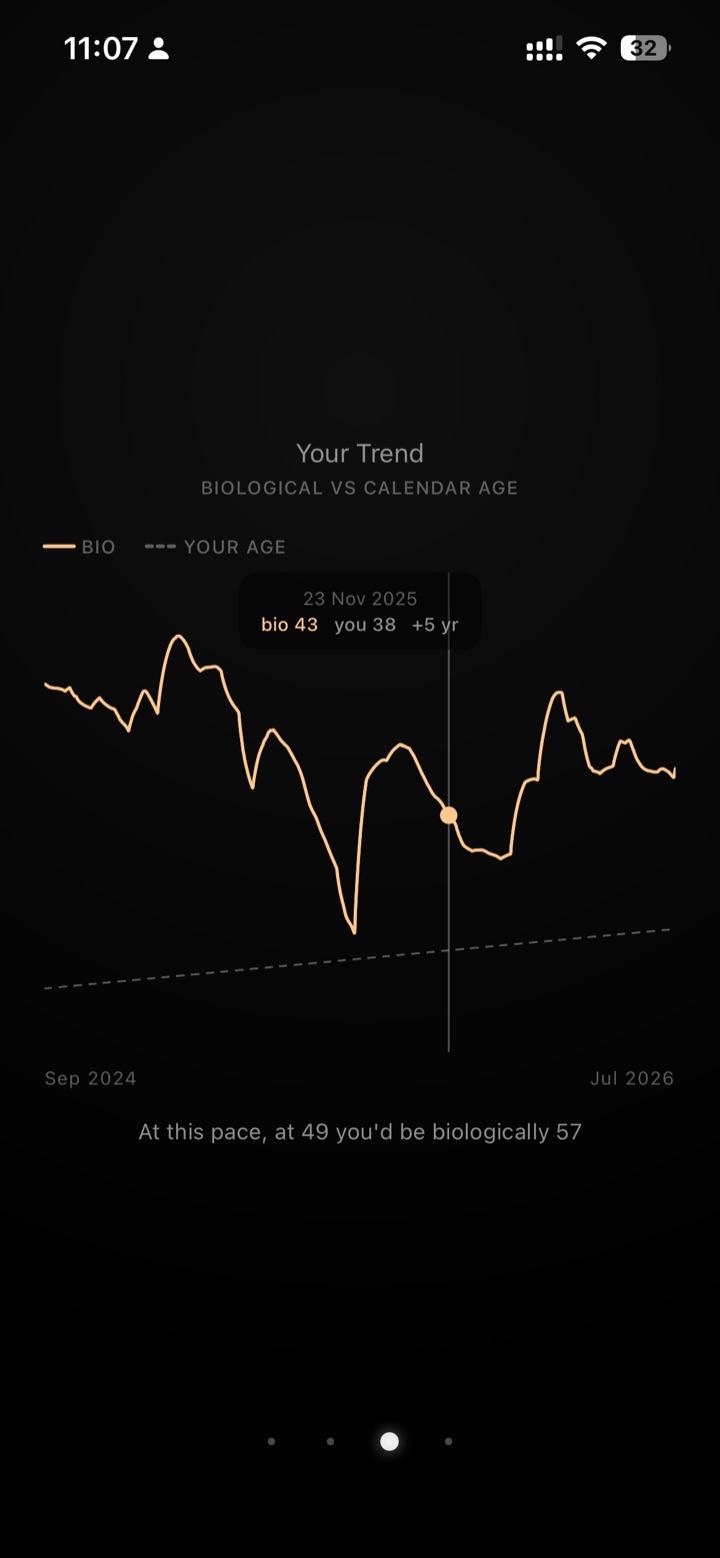
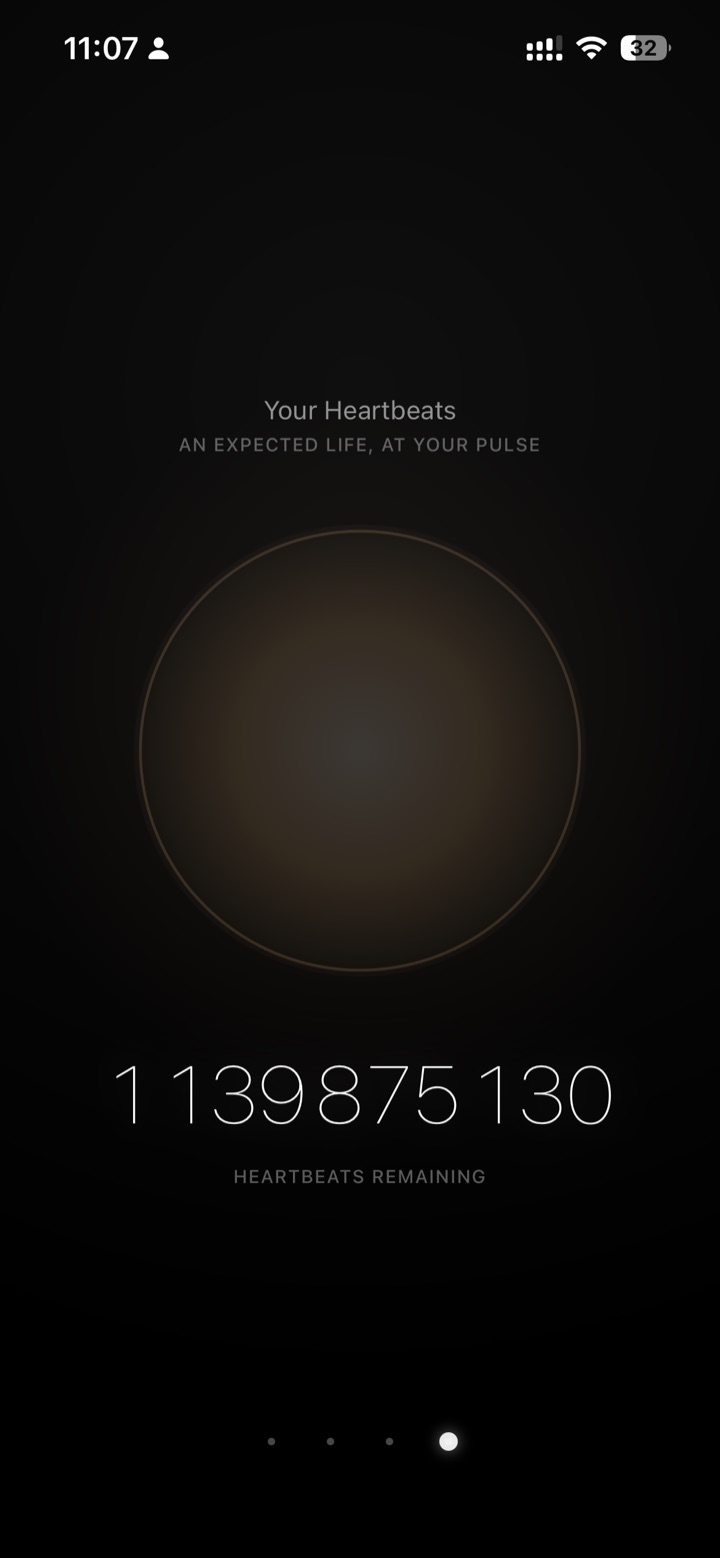
Four things a day: the age your body is living at, where it's drifting, one small thing to do at an hour that's actually yours, and the heartbeats you have left.
The number runs cool blue when you're younger than your years, warm amber when you're older.
No streaks, no plans, no supplements — and nearly all of it optional, the face included. Bring your patience: the number moves in months, not days — but it moves, if you keep at it.
It doesn't assume your day is free.
It's one in the morning and you're still up. The usual advice says get your eight hours; Years knows that window shut long ago and asks for the only thing still true at this hour — stop here, save what's left of the night.
Every hour works like that: when you actually sleep, what your day is already promised to, how much room you have to move. There's work, someone who needs you, the thing nobody planned — so the ask stays small enough to survive all of it. It never has to be perfect. It only has to move, and move again tomorrow.
Notifications follow the same rule: one only when you're behind on something that can still be fixed — never for a streak, never to pull you back in. Three a day is the ceiling; most days, nothing at all.
Questions
What you need, what it costs, and what never leaves.
What do I need?
An iPhone, and something you wear that writes to Apple Health. A resting heart rate on its own is enough for a real number and a real trend — a Garmin, an Oura, a Whoop, whatever is already on you. An Apple Watch adds Cardio Fitness, the strongest signal of the lot, and sleep and daily movement tighten it further. With none of it Years still opens, but it will tell you plainly that the number is a rough estimate.
What does it cost?
Nothing. No account, no subscription, nothing to buy and nothing held back for later — every page, every number and every nudge is simply the app.
What leaves my iPhone?
Nothing. Your Apple Health data is read on your phone and your biological age is worked out right there. Your photo never goes anywhere. Every message you'll read was written before you installed the app and chosen on your device; every nudge is decided, worded and scheduled there too. There is no account, no analytics, no trackers and no third-party SDK — and no server for any of it to reach.
Then where does the daily message come from?
A catalogue that ships inside the app, written ahead of time for the shapes a day can take — the late night, the week you've been travelling, the stretch where nothing has moved. Your phone reads what your night and your week actually look like and picks the one that fits. It's a big catalogue, so you won't often meet the same line twice.
Why these asks, and what the number is really tracking?
Years is a longevity app. Without blood tests, the strongest HealthKit signal for how long you stay well is Cardio Fitness (VO₂max) — measured by a watch during activity. Resting heart rate is the next-best complement when that reading is thin; heart-rate variability rounds out the same autonomic picture. Sleep is a smaller long-term modifier. The estimate carries about ±6 years of error by design; the gap and the trend are what matter.
Exercise is the main lever you can pull. To train and recover, sleep has to work. Sleep works when rhythm and light match the day — morning daylight, a calmer wind-down, a steadier wake time. Home notes are day supports for that chain, not a separate checklist.
What about this website?
Static files and nothing else. No scripts, no analytics, no forms, no cookies, nobody counting. I don't know you were here.
Straight from the code — last reviewed August 2026.